Caviar Without the Myths
January 14, 2026
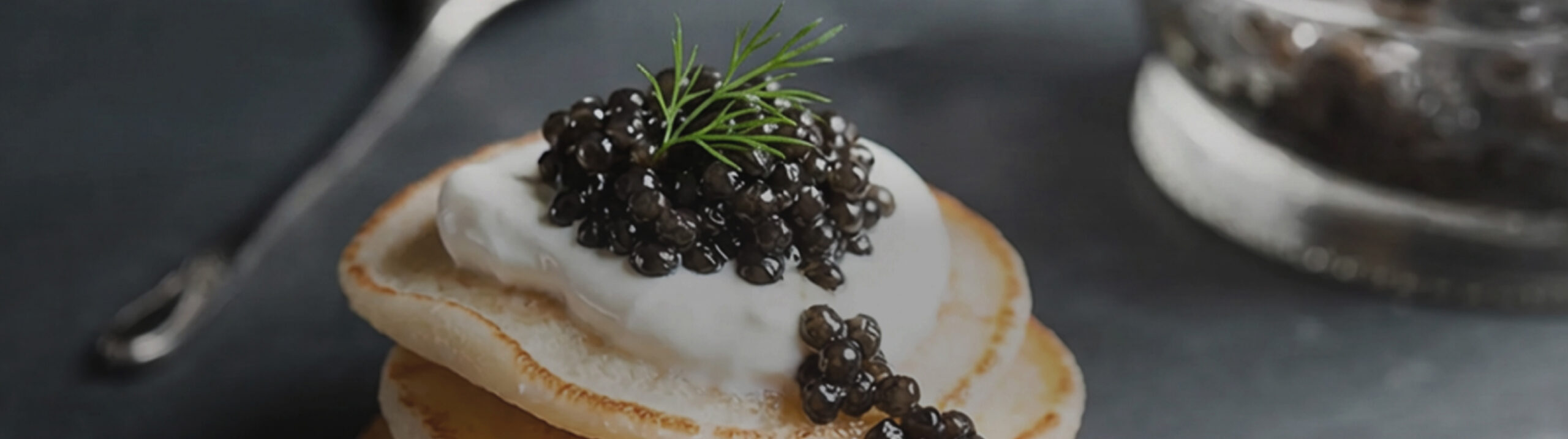
Caviar is often treated as a luxury product or a festive table element. At the same time, its most practical quality is overlooked: caviar is one of the most nutrient-dense natural foods that humans can consume.
If we strip away the status symbol image from caviar, what remains is a nutritional powerhouse: a small amount delivers many valuable nutrients that the body absorbs well.
Caviar Before the Festive Table
The history of caviar does not begin with silver spoons and festive tables. Historically, fish roe was a practical food in regions where fish was caught and preserved daily. Along the Caspian Sea and major rivers, caviar was not treated as a delicacy but as part of everyday food. It was easily preserved, full of nutrients, and a small amount provided energy – making it well suited to periods of work and travel.
The value of caviar did not lie in its rarity but in its density. A small amount gave the body much and required no complex preparation. This is precisely what made fish roe a logical food for people whose lives were physically or mentally demanding.
The status-related image of caviar is historically relatively new. It only emerged when natural availability decreased and food became a status marker. The food itself did not change. What changed was the context in which it began to be consumed and interpreted.
Caviar as Concentrated Food
Caviar is a fish egg. This means that everything needed for new life to begin is concentrated there in high amounts. The egg is biologically one of the most “complete” structures in nature, because it must contain everything without which development cannot begin.
This is precisely what makes caviar a food that resembles a supplement in its logic. The difference is that it is not laboratory-isolated substances, but a natural whole that is easily absorbed by the body.
The egg contains:
- high-quality, easily digestible protein
- omega-3 fatty acids (EPA and DHA)
- B-group vitamins
- vitamins A, D and E
- minerals such as selenium, phosphorus and iron
Importantly, these nutrients occur together in caviar, not separately. It is precisely this combination that supports their absorption and balanced effect on the body.
A Small Amount, Real Impact
Caviar is eaten in small quantities. About 10–15 grams does not burden digestion nor cause blood sugar fluctuations, but provides the body with quickly usable fatty acids and micronutrients. This amount is sufficient to support the nervous system and cellular energy without causing heaviness.
Most foods have lost their natural portion size over time. Sociologically, this is an interesting phenomenon. Caviar is one of the few foods whose consumption has not lost contact with the body. It is not eaten to fill the stomach or out of boredom. It is eaten consciously, slowly and in small amounts. Not for the sake of etiquette, but because the body does not ask for more.
This makes caviar the antithesis of today’s food culture, where quantity is often disconnected from need. Caviar remains a food where the portion is not a social construct but a biological agreement.
Omega-3 Fatty Acids Without a Capsule
One of the most common supplements is the omega-3 capsule. Caviar offers the same source of fatty acids in natural form. In natural food, fatty acids are bound to phospholipids, which makes their use more intuitive for the body. The difference is that a capsule is isolated fat, while caviar is a complete food where fatty acids are linked to a natural fat profile and accompanied by vitamins that support absorption. Therefore, the effect is gentler and more logical for the body.
Why Caviar is Not “Too Fatty”
One of the most common myths is that caviar is heavy or too fatty food. This impression often comes from the word “fat” itself, not from how caviar actually works in the body. Caviar is eaten in small quantities and the fats it contains are part of the natural composition of fish roe, not a processed or isolated fraction. Therefore, caviar does not behave during digestion the same way as heavy fatty foods with which it is often compared.
If caviar feels “heavy”, the reason is usually what it is eaten with, or the way of eating, not the caviar itself.
Caviar and the Brain
The fatty acids and B vitamins found in caviar support the nervous system and brain activity in a way that suits mentally demanding periods. These nutrients are directly related to the construction of nerve cell membranes and signal transmission.
This provides stable support for the body, helping to maintain focus and keep fatigue in balance. Caviar suits days where concentration is important, many decisions need to be made and the mental workload is high. Also periods where recovery and caring for the nervous system are as important as work itself.
The Story Caviar Does Not Need
Today’s food culture largely relies on stories. Promises, functional claims and trends give food meaning that it does not carry alone. Many “superfoods” need a narrative to justify their place at the everyday table.
Caviar is outside this logic. It has worked for thousands of years without explanations, campaigns and promises. People did not start eating fish roe because someone positioned it, but because it worked. A small amount nourished, sustained and gave the body what it needed at that moment.
Want to learn more?
Explore articles about seafood origins, sustainable fishing, science, and longevity. Deepen your understanding of the ocean's treasures.
How to Identify Quality Red Fish Roe
Fish roe is a product where quality differences are significant, but often not immediately visible…
January 14, 2026
20 Points on How to Identify High-Quality Caviar
The taste and texture of caviar are a direct reflection of the growing environment. When…
January 14, 2026
Snow Crab is a Healthy, Sustainable and Delicately Flavoured Delicacy
Snow crab is a true world traveller, finding its way into traditional Japanese dishes as…
January 14, 2026